Providing the right diet is one of the most important responsibilities in chicken care. Proper nutrition supports healthy growth, improves egg production, and helps prevent disease. Whether you manage a small backyard flock or a commercial poultry setup, knowing what chickens should and should not eat makes a big difference in their overall performance.
Types of Chicken Feed
Chickens require balanced feed that matches their age and purpose. Commercial poultry feed is specially formulated to meet these needs.
- Starter Feed
Designed for newly hatched chicks, starter feed contains higher protein levels to support early development and strong immune systems. - Grower Feed
Grower feed is given after the starter phase. It supports steady growth in young birds without the excess nutrients needed for egg production. - Layer Feed
Layer feed is formulated for hens that are laying eggs. It includes essential nutrients and added calcium to promote strong eggshells and consistent egg production. - Broiler Feed
Broiler feed is higher in protein and energy, helping meat birds grow faster and develop healthy muscle mass.
Feed Forms Explained
Chicken feed comes in different physical forms, and each has its own advantages depending on bird age and feeding preference.
- Mash – Finely ground feed that is easy for young chicks to consume.
- Crumble – A broken-up pellet that works well for both chicks and adult birds.
- Pellets – Compact feed that reduces waste and is easy to handle.
- Scratch Grains – A mix of grains best used as an occasional treat, not a complete diet.
Natural Supplements
In addition to complete feed, certain supplements can improve digestion and nutrient absorption.
- Shell Grit helps chickens grind food in their gizzard, improving digestion.
- Fermented Feed can increase nutrient availability and may support better gut health while reducing feed costs.
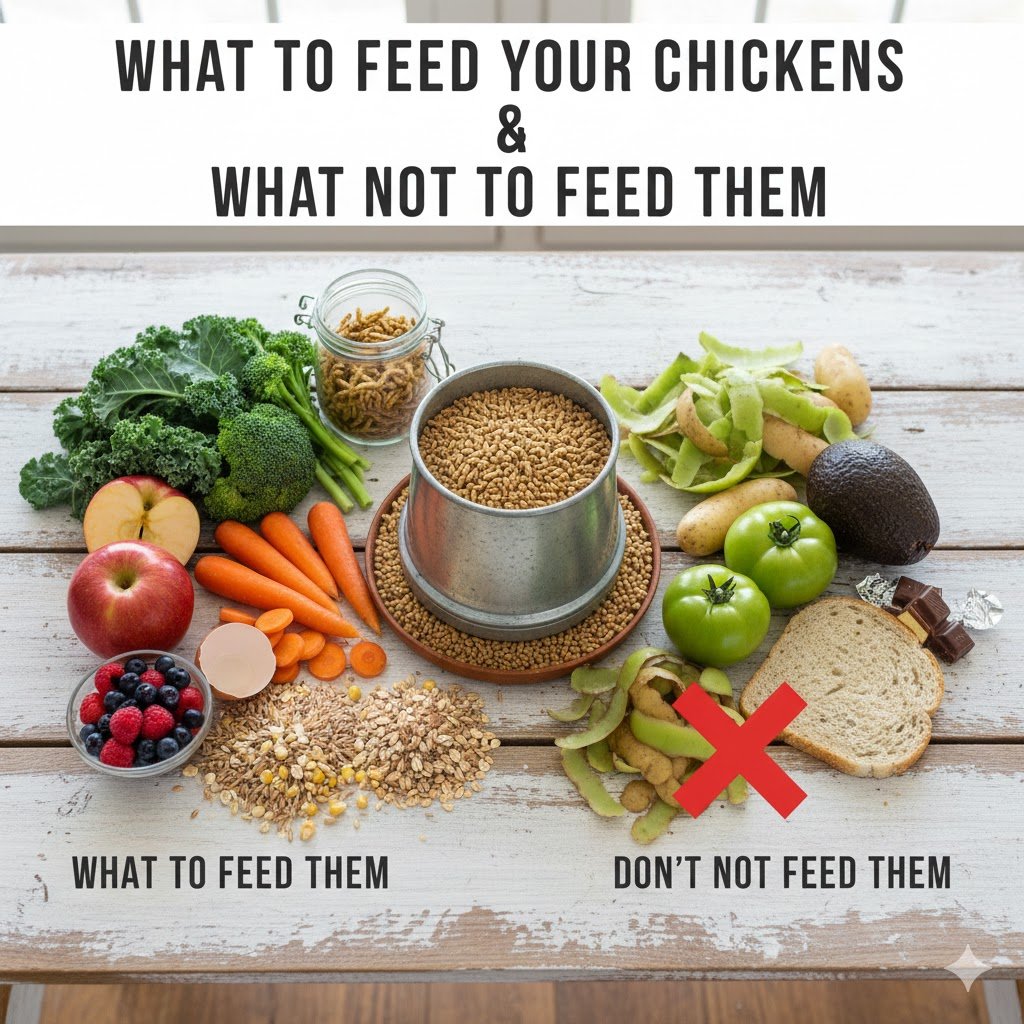
Foods Chickens Shouldn’t Eat
Although chickens will peck at almost anything, some foods are harmful and should never be offered.
❌ Toxic Foods
- Avocado skins and pits – contain substances toxic to birds
- Chocolate – harmful due to theobromine content
- Raw or dried beans – contain dangerous compounds when uncooked
- Nightshade plant parts – including tomato leaves and potato vines
- Moldy or spoiled food – can cause serious illness or poisoning
❌ Other Problem Foods
- Salty or sugary processed foods – disrupt digestion and hydration
- Large amounts of onions – may affect blood health and egg quality
- Apple seeds – contain small amounts of toxic compounds
Safe Treats
When given in moderation, treats can add variety and enrichment to a chicken’s diet.
✔ Fruits and Vegetables
Seed-free apples, berries, cucumbers, leafy greens, and squash are good options.
✔ Cooked Grains and Pasta
Plain cooked rice, oats, or pasta can be offered occasionally.
✔ Herbs
Fresh herbs like basil, parsley, and oregano can provide additional nutrients.
Note: Treats should make up no more than 10% of a chicken’s daily intake.
Final Tips for Healthy Feeding
- Always ensure access to clean, fresh water
- Store feed in a dry, pest-free area
- Introduce new foods gradually and observe your flock
A balanced feeding program is the foundation of healthy poultry. By offering proper feed, safe treats, and avoiding harmful foods, you create the best environment for your chickens to thrive.If you want to know more about chicken feeding? Or want to start a new chicken farming business contact us.Feel free to talk to us.