
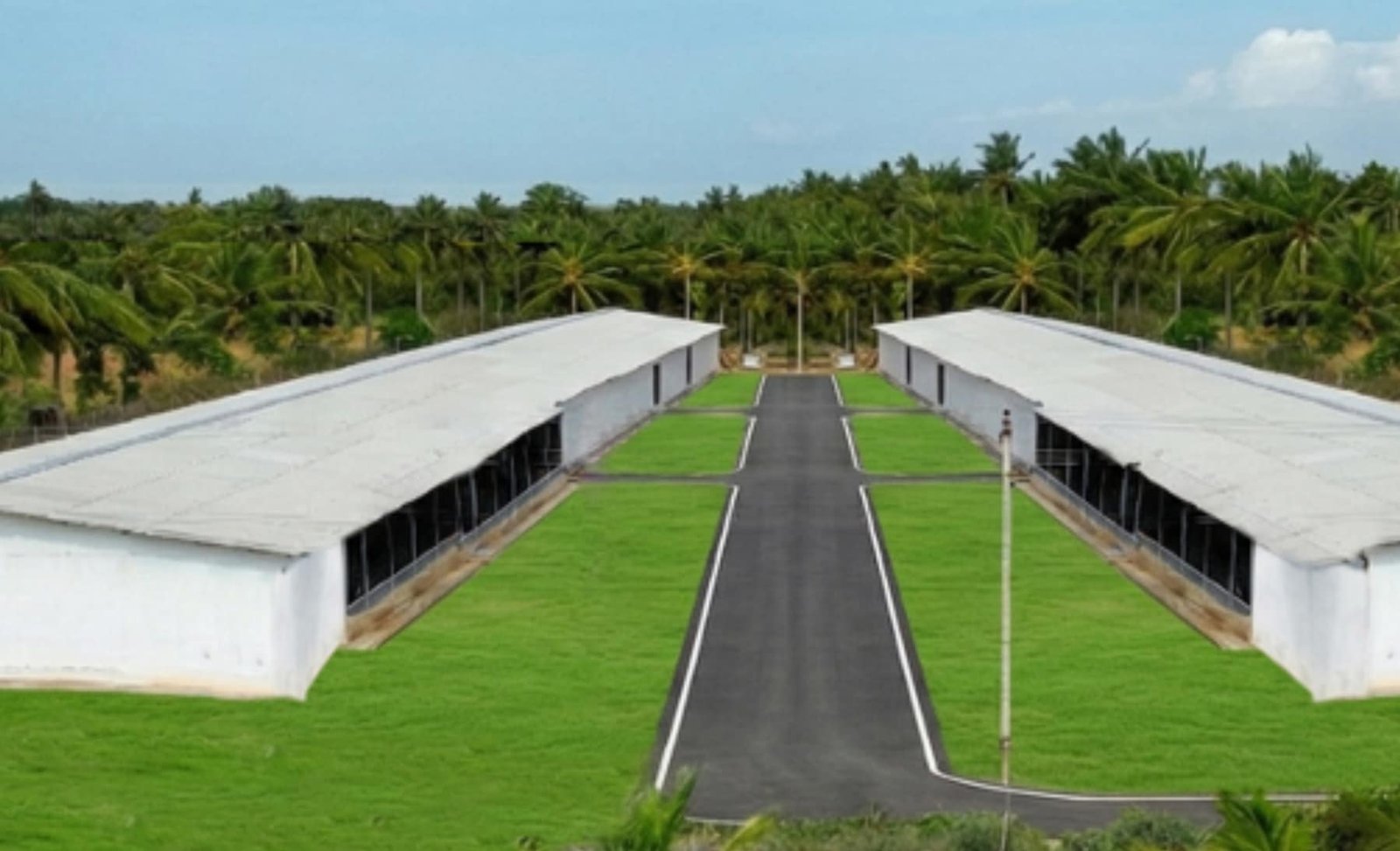
Poultry farming is one of the fastest-growing agribusinesses, but not all poultry farming types are the same. Many beginners fail simply because they choose the wrong type of poultry farming for their budget, location, or experience level.
Before you start, it’s important to understand the different types of poultry farming, how they work, and which one suits you best. This guide explains everything in simple terms.
1. Broiler Poultry Farming (Meat Production)
Broiler farming is the most popular type of poultry farming, especially for beginners.
Key Features:
- Raised for chicken meat
- Ready for sale in 35–45 days
- Fast income cycle
- High market demand
Best For:
- Beginners
- Farmers who want quick returns
- Small to medium investment
- Why choose-Low risk, fast growth, and easy to manage.
2.Layer Poultry Farming (Egg Production)
Layer farming focuses on egg production rather than meat.
Key Features:
- Birds start laying eggs after 18–20 weeks
- Daily income from eggs
- Long-term business model
Best For:
- Farmers with patience
- Those looking for stable monthly income
Requires better management and planning compared to broiler farming.
3. Backyard Poultry Farming
Backyard poultry farming is ideal for small farmers and households.
Key Features:
- Low investment
- Local or desi breeds
- Minimal infrastructure
- Suitable for rural areas
Best For:
- Beginners with limited capital
- Supplementary income
- Home consumption + local sales
Popular breeds: Kadaknath, Country chicken, Gramapriya
4. Free-Range Poultry Farming
In free-range farming, birds are allowed to move freely outdoors.
Key Features:
- Natural feeding system
- Healthier and tastier meat
- Higher egg price
Best For:
- Areas with open land
- Organic or premium markets
Cons:
Needs more land
Need to protect from predators.
5. Organic Poultry Farming
Organic poultry farming avoids chemicals, antibiotics, and synthetic feed.
Key Features:
- Certified organic feed
- High market value
- Health-conscious consumers
Best For:
- Niche markets
- Export or premium customers
6. Commercial Poultry Farming
Commercial poultry farming is done on a large scale using modern technology.
Key Features:
- Thousands of birds
- Automated feeding and watering
- High production capacity
Best For:
- Experienced farmers
- High investment capability
- Contract farming models
7. Quail, Duck & Turkey Farming (Alternative Poultry Farming)
Apart from chickens, poultry farming also includes quail, duck, and turkey farming.
Key Features:
- Less competition
- Unique market demand
- Faster maturity (especially quail)
Best For:
- Farmers looking for diversification
- Areas with specific demand
How to Choose the Right Type of Poultry Farming?
Ask yourself these questions before starting:
- How much investment can I afford?
- Do I want quick income or long-term income?
- Is there local market demand?
- How much time can I manage daily?
Beginner Recommendation:
Start with broiler or backyard poultry farming, then expand gradually.
Final Thoughts
Understanding the types of poultry farming is the first and most important step before entering this business. Each type has its own advantages, investment level, and risks.
Start small, choose wisely, and grow step by step. Poultry farming can become a stable and profitable business if you begin with the right model.